
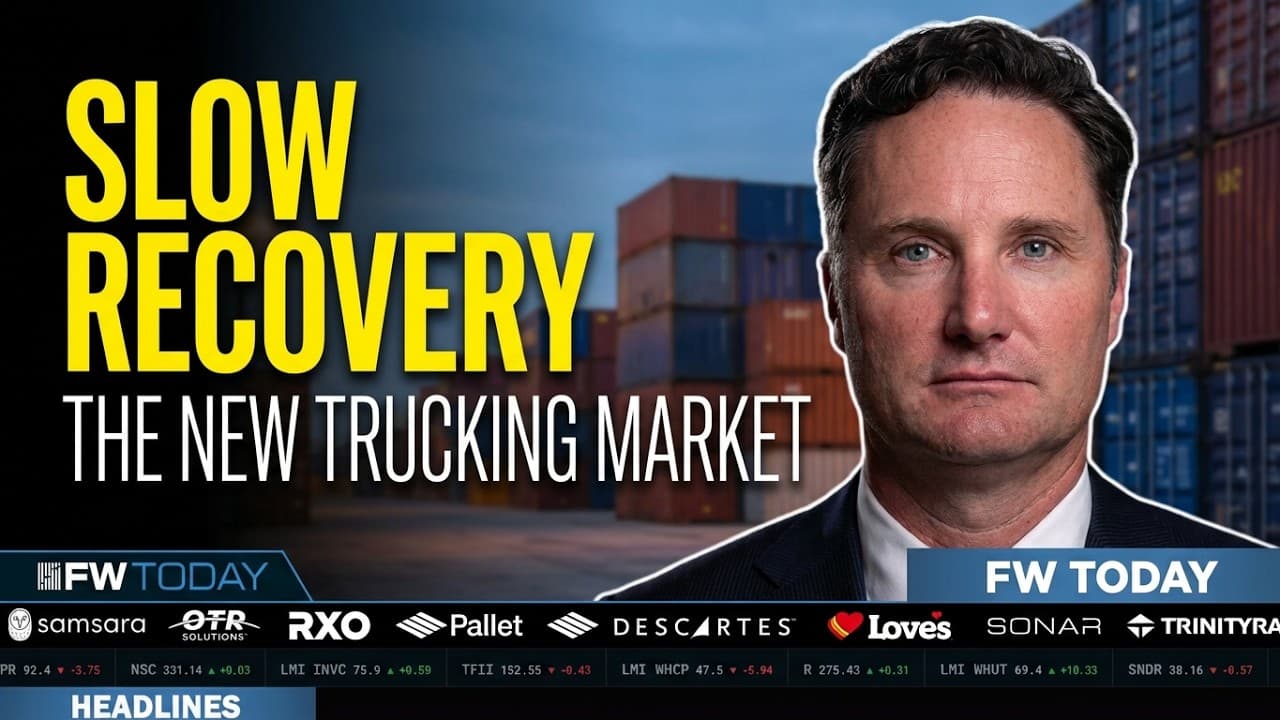
Photo via FreightWaves
According to Aaron Graft, CEO of Triumph Financial, the trucking market is experiencing a structural shift that distinguishes the current cycle from previous freight upturns. Rather than following the traditional pattern where capacity floods the market during recovery periods, elevated barriers to entry are fundamentally constraining supply expansion. Increased litigation, regulatory requirements, and legislative pressures are making it more difficult for new carriers to enter the market and for existing operators to scale operations.
The emergence of these headwinds—encompassing legal complexities, compliance costs, and evolving legislation—creates a notably different backdrop than historical freight cycles. This structural constraint suggests the industry may not experience the typical boom-bust pattern of capacity surges followed by market saturation that characterized past recoveries. Instead, carriers and logistics operators face a market environment where supply-side limitations could sustain pricing power and tight conditions for an extended period.
For shippers and freight purchasers, this structural tightness carries significant implications. If capacity constraints persist longer than in previous cycles, it could support elevated transportation costs and limit pricing flexibility in the near term. Market participants will need to reassess their assumptions about typical freight market dynamics and adapt strategies accordingly in an environment where regulatory and legal friction fundamentally reshape supply-side availability.