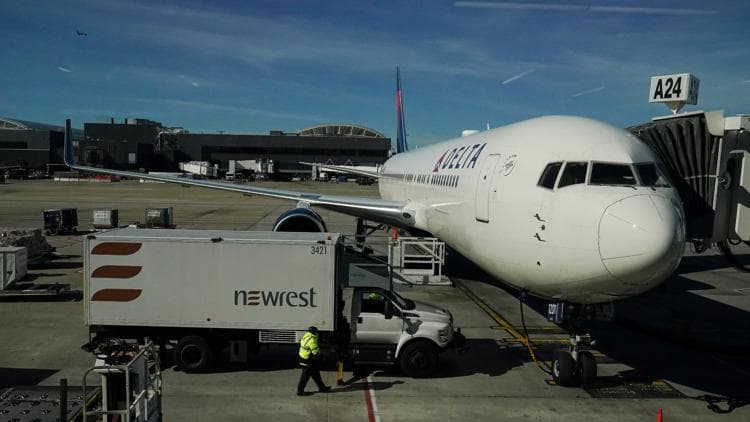
Photo via CNBC Business
U.S. airlines faced a dramatic increase in fuel expenditures during March, with jet fuel spending climbing 56.4% compared to February, according to data released by the U.S. government this week. The sharp rise coincided with escalating tensions in the Middle East, a region critical to global oil supply chains that directly influences fuel prices at the pump.
For Atlanta-area aviation and logistics businesses, the surge carries immediate implications. Delta Air Lines, headquartered in Atlanta, is among the nation's largest carriers and particularly sensitive to fuel cost volatility. The airline's operating margins depend heavily on energy expenses, making sudden price spikes a concern for investors and stakeholders tracking the company's quarterly performance.
Fuel surcharges and pricing adjustments typically follow periods of elevated energy costs, meaning consumers and businesses relying on air travel—from tourism to logistics—may see higher fares and shipping rates in coming weeks. Atlanta's status as a major hub for both passenger and cargo operations means the region's economy feels the ripple effects of aviation industry disruptions more acutely than many markets.
Industry analysts expect fuel costs to remain volatile as geopolitical tensions persist. Airlines are likely to implement dynamic pricing strategies to offset margin compression, while supply chain managers may need to reassess air freight budgets. Stakeholders in Atlanta's thriving transportation and distribution sectors should monitor fuel price trends closely as they plan for the remainder of the year.