
Photo via Mish Talk
Recent tax policy changes have generated significant debate about their actual economic impact and who benefited most from the legislation. While supporters have highlighted the overall economic stimulus from reduced tax burdens, a closer examination of the distributional data reveals the benefits were concentrated among specific segments of the population and business sectors.
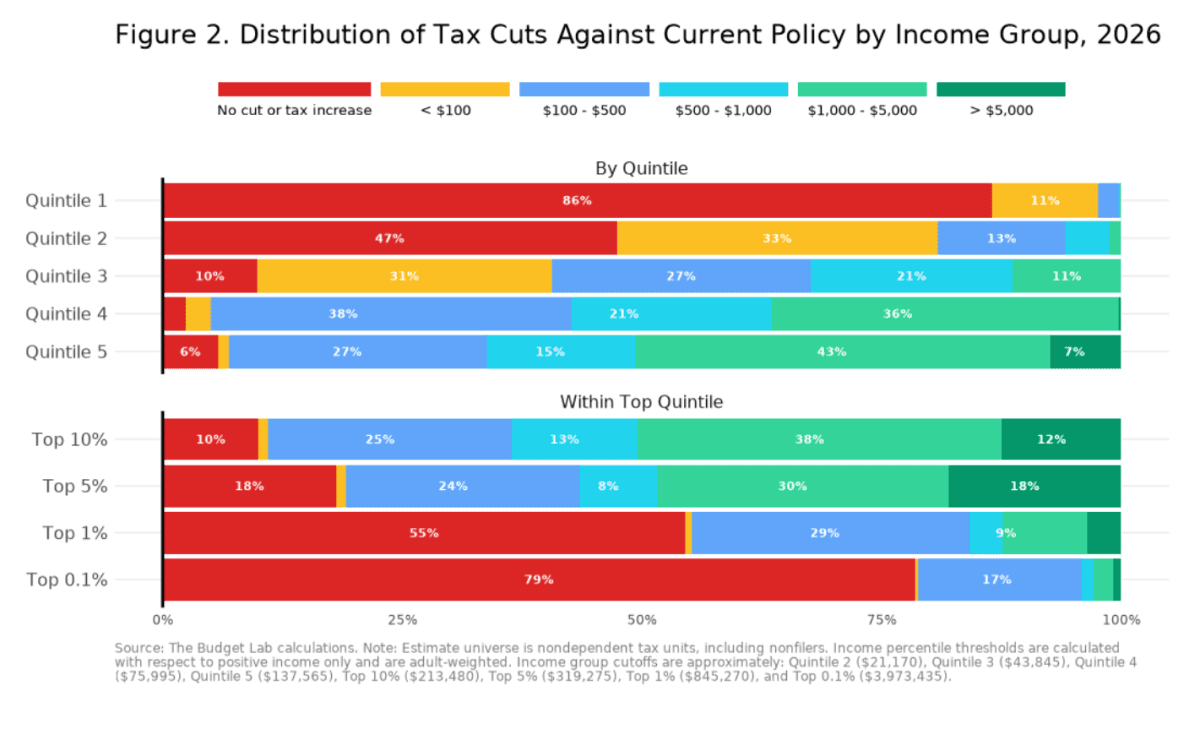
According to available economic analyses, the tax cuts disproportionately favored higher-income earners and large corporations, while middle and lower-income households saw more modest gains. The temporary nature of many individual tax provisions, combined with permanent reductions in corporate rates, created disparities in long-term benefit distribution that merit scrutiny from policymakers and economists across the political spectrum.
Understanding the actual incidence of tax policy changes remains essential for evaluating their effectiveness in achieving stated policy objectives. As debates continue over future tax legislation, a clear-eyed assessment of prior reforms' distributional outcomes can inform more targeted approaches to fiscal policy.