Photo via Fast Company
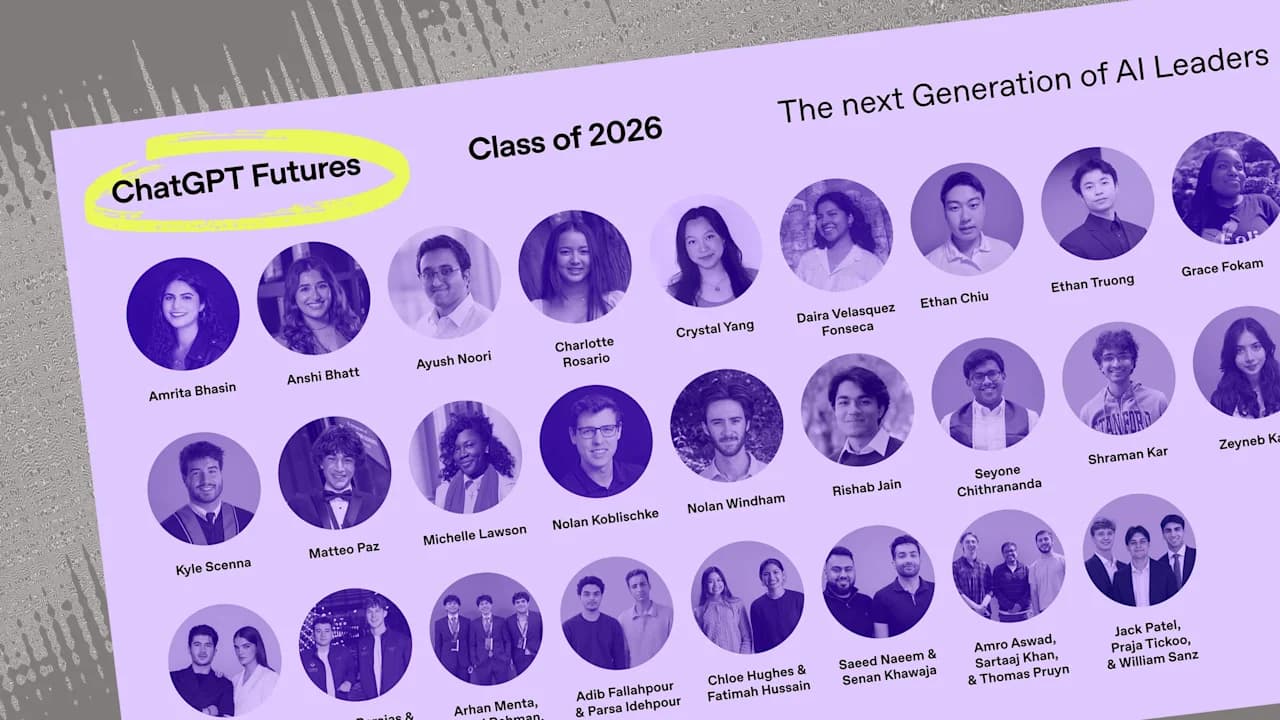
OpenAI has awarded $10,000 grants to 26 students and recent graduates through its ChatGPT Futures program, recognizing a generation leveraging artificial intelligence for meaningful social change. The initiative highlights how the first college cohort to have ChatGPT available throughout their entire university experience is deploying the technology to tackle challenges ranging from accessibility to healthcare innovation, according to Leah Belsky, head of education at OpenAI.
Among the honorees is Crystal Yang, a University of Pennsylvania student who founded Audemy, a nonprofit developing audio-powered games for blind and visually impaired players. Inspired by a high school friend unable to participate in Wordle, Yang has used AI to help manage her team of volunteer developers, conduct user research, and prototype an accessible gaming console with audio and tactile features. Yang's work demonstrates how AI can amplify individual capacity rather than replace human judgment and collaboration.
Other award winners are developing AI applications with broad societal impact: space robotics to assist astronauts, Wi-Fi-based disaster survivor detection, financial tracking tools for Latin American vendors, and medical breakthroughs including a neural disease prediction model called Proton. These projects reflect what technology leaders increasingly recognize—that AI, when directed thoughtfully, can democratize access to tools and opportunities previously limited to well-resourced institutions.
The awards arrive amid ongoing debate over AI's role in education, with critics concerned about student over-reliance and academic integrity. However, Belsky argues that campus visits reveal growing examples of students using AI to launch genuine initiatives. The $10,000 grants carry no restrictions, signaling OpenAI's confidence that these young innovators will reinvest the resources into advancing their projects and inspiring peers to do the same.