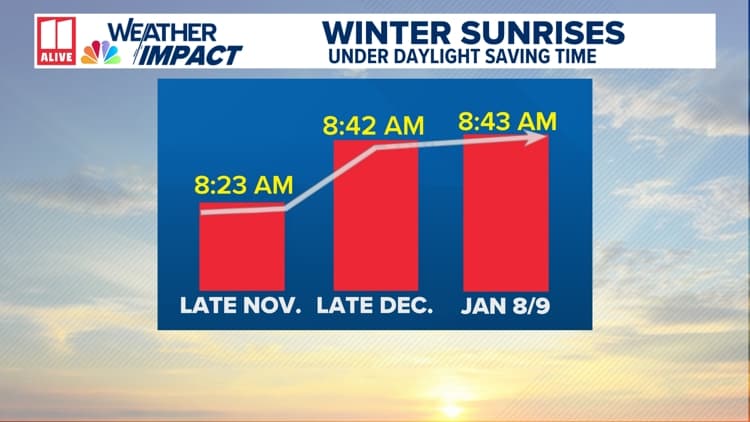
Photo via 11Alive Atlanta
The push toward year-round daylight saving time has gained momentum in policy circles, and Atlanta-area business leaders should understand how the shift could affect daily operations. According to 11Alive Atlanta, while extended evening daylight appeals to many residents and could benefit retailers and entertainment venues, the proposal carries significant trade-offs that warrant careful consideration for Georgia's business community.
Winter mornings would see a dramatic shift under permanent daylight saving time, with sunrise occurring significantly later in the season—creating darker commutes for Atlanta's workforce and potentially impacting employee safety and productivity. For energy-intensive industries and commercial real estate operators, the extended evening daylight could reduce lighting costs, while earlier sunsets during standard time months have historically driven afternoon retail activity. Retailers, restaurants, and entertainment venues must evaluate whether later sunsets would extend customer engagement enough to offset potential morning-hour operational challenges.
Georgia lawmakers and Atlanta business organizations should weigh regional economic impacts before supporting permanent daylight saving time. The decision could influence everything from downtown activation and office building energy management to school schedules and logistics operations—making it essential for the Atlanta business community to engage in this policy discussion before any legislative changes take effect.