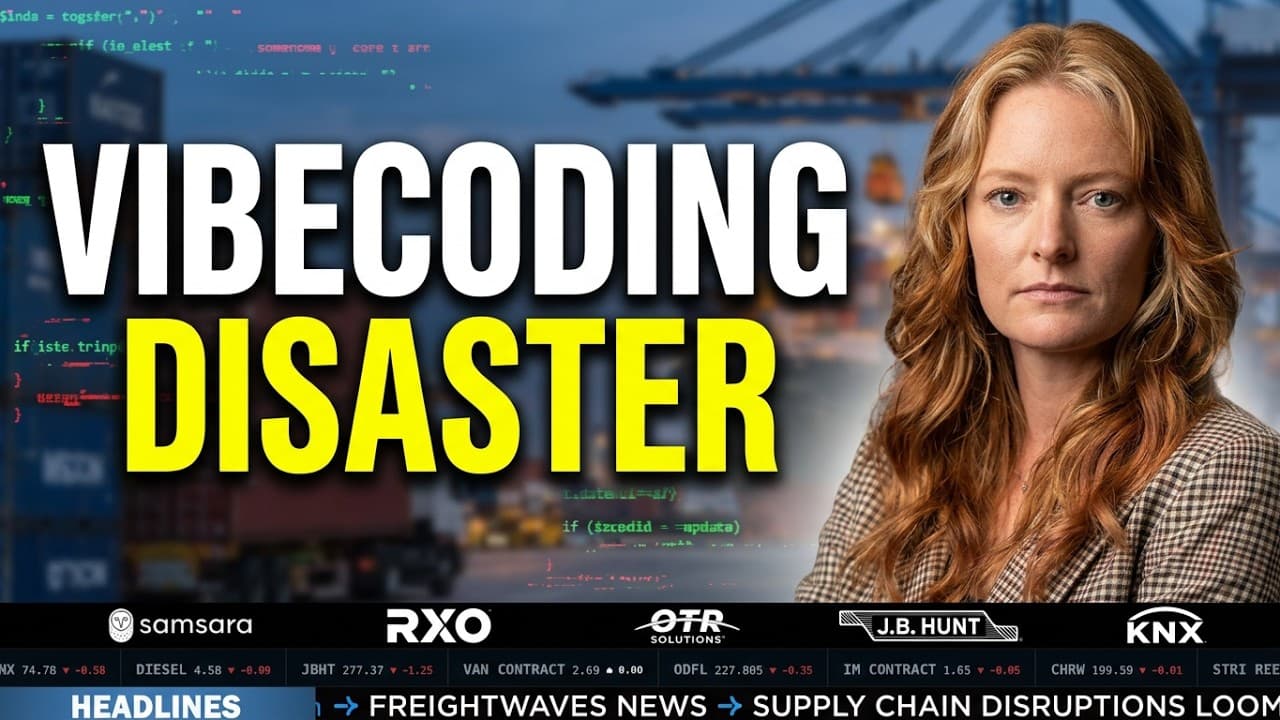
Photo via FreightWaves
Building a reliable Transportation Management System (TMS) demands strategic investment and proper technical infrastructure, not improvised solutions. According to industry experts, taking shortcuts in TMS development—approaching it as a side project rather than a core operational priority—creates significant risks for logistics operations that depend on precision, scalability, and reliability.
According to Alyssa Norcross, Group Product Manager at Revenova, many organizations fail by cutting corners on TMS architecture. Effective systems require enterprise-grade foundations, often built on proven platforms like Salesforce, combined with deep functionality, robust API integrations, and comprehensive security frameworks. These elements work together to handle the complexity of modern supply chain management.
The consequences of inadequate TMS infrastructure extend beyond immediate operational disruptions. Incomplete systems create data silos, complicate scaling, increase security vulnerabilities, and limit the integrations necessary for seamless coordination across supply chain partners. Organizations serious about logistics optimization must prioritize TMS as a strategic investment rather than a technical afterthought.