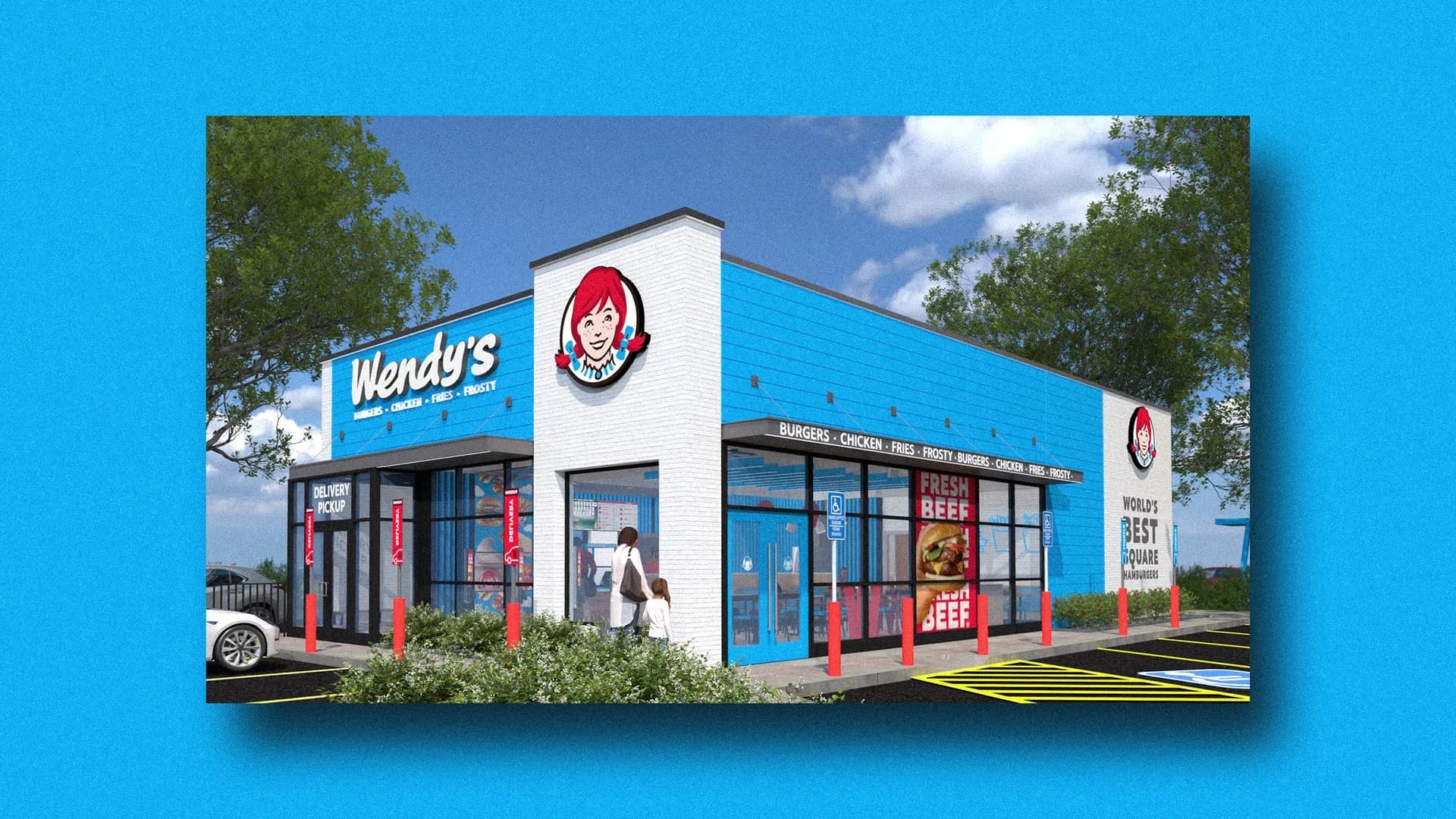
Photo via Inc.
Wendy's is challenging a fundamental principle of food service branding by allowing international franchisees to paint their restaurants light blue instead of the chain's iconic red. According to Inc., this departure from traditional color convention aims to communicate a commitment to digital ordering and modern technology to customers worldwide. The shift reflects how quick-service restaurants are adapting their visual identity to compete in markets where digital-first dining has become table stakes.
For decades, the fast-food industry has relied on bold, warm colors like red and yellow to stimulate appetite and create brand recognition. Wendy's decision to permit the light blue alternative challenges this long-held marketing wisdom. The new color is intended as a visual cue that franchisees in these markets prioritize mobile ordering, online payment, and other digital conveniences—signals that increasingly matter to consumers evaluating where to eat.
This strategic pivot has implications for Atlanta-area franchisees and regional restaurant operators considering their own digital transformation. As QSR brands evaluate how to communicate modernization efforts to customers, the question becomes whether visual branding can effectively telegraph operational capabilities. Local franchise owners may need to weigh tradition against innovation when deciding how prominently to feature digital-first messaging in their marketing and physical spaces.
The broader question remains unanswered: does light blue actually make diners hungry, or does the digital signaling outweigh traditional appetite-stimulating color theory? As this experiment unfolds internationally, Atlanta's restaurant community will be watching to see whether breaking the biggest color rule in food branding becomes the new industry standard—or a cautionary tale about tampering with proven marketing fundamentals.