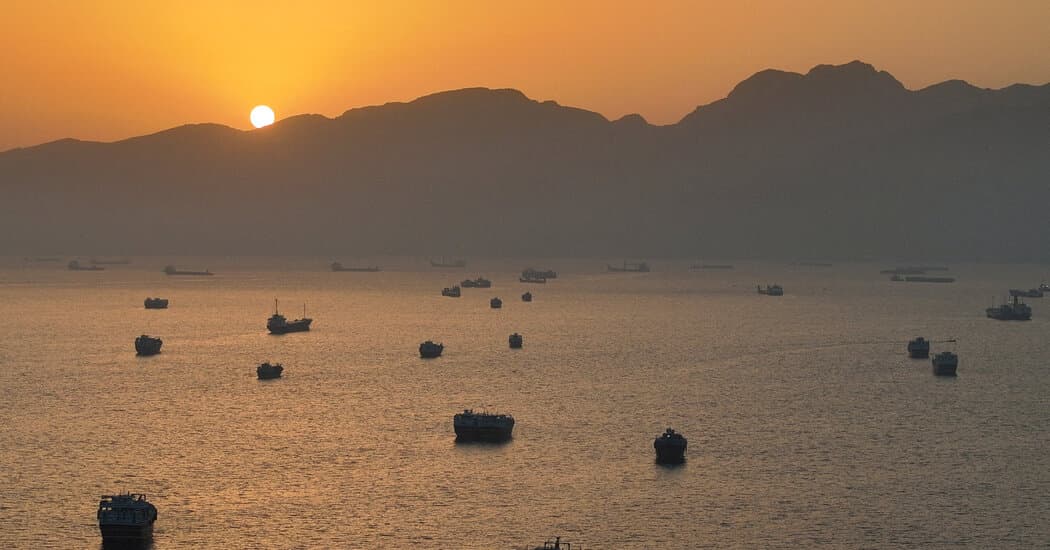
Photo via NYT Business
The U.S. military has intensified its role as a commercial shipping facilitator in one of the world's most critical maritime chokepoints. According to reporting from the New York Times Business section, U.S. Central Command has shepherded approximately 70 commercial vessels through the Strait of Hormuz over a three-week period, underscoring ongoing geopolitical tensions that threaten global trade flows.
For Atlanta-area businesses dependent on international supply chains, these military operations carry significant implications. The Strait of Hormuz serves as a gateway for roughly one-third of global seaborne oil trade, making its stability crucial for companies in energy, logistics, and retail sectors that source materials or products through Asian markets. Any disruption in passage could ripple through regional supply networks and increase shipping costs.
The military's increased presence reflects concerns about regional instability that could otherwise strand shipments or force vessels to take costly alternative routes. By providing navigation assistance and security assurance, U.S. Central Command is effectively underwriting the viability of commerce through contested waters—a role that private shipping companies increasingly rely upon to maintain insurance rates and delivery schedules.
Atlanta's port and logistics sectors should monitor this development closely. Any sustained military intervention model could reshape how companies factor geopolitical risk into supply chain planning. Businesses relying on timely Middle Eastern trade should review contingency protocols and consider how extended military escort operations might affect long-term shipping costs and route reliability.