Photo via Fast Company
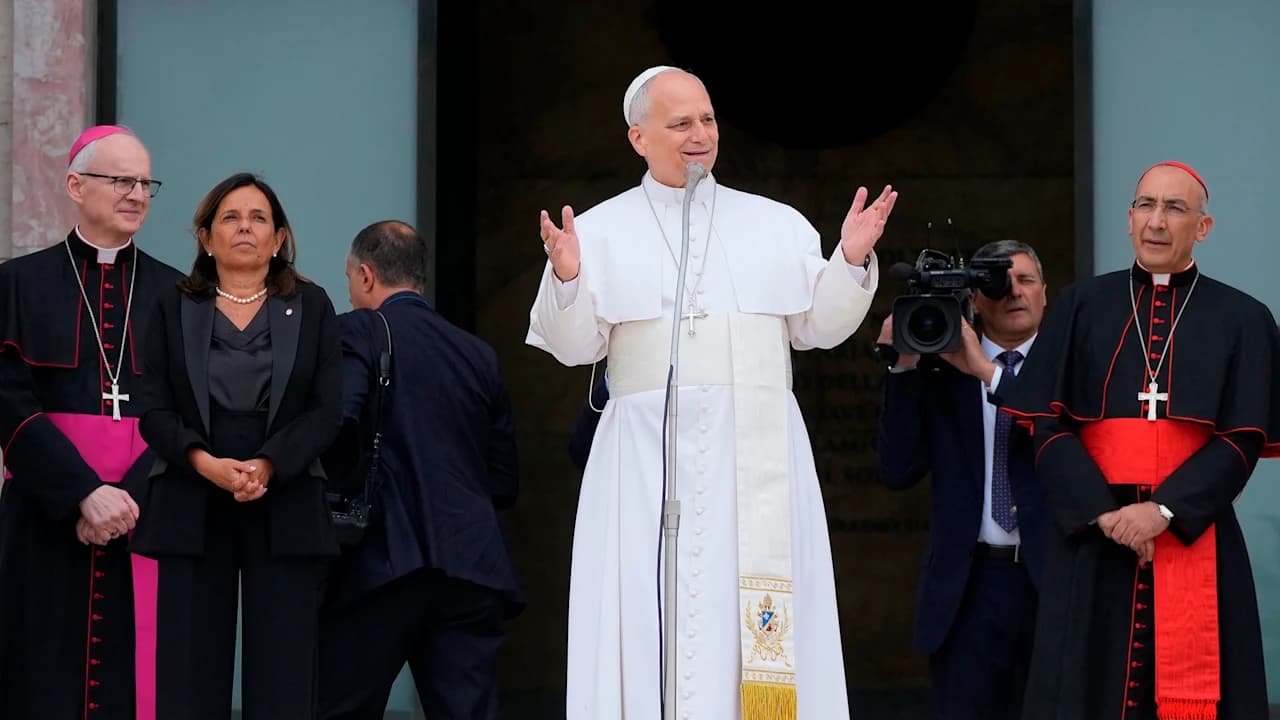
Pope Leo XIV has issued a stark warning about the convergence of artificial intelligence and military applications, calling the trend a 'spiral of annihilation' that demands immediate ethical scrutiny. Speaking at Rome's La Sapienza University this week, the American pope highlighted how defense spending has accelerated dramatically, particularly across Europe, while simultaneously reducing investments in education and healthcare. According to the Associated Press, Leo specifically criticized how such spending enriches elites while leaving vulnerable populations behind—a message that resonates with Atlanta business leaders increasingly focused on corporate social responsibility.
The pope's remarks point to a critical governance gap: the need for robust oversight of AI development across military and civilian sectors. Leo emphasized that technological advancement must not absolve humans of moral responsibility for their choices, nor should it intensify the human cost of armed conflicts. His concerns about AI's dual-use potential—beneficial in civilian contexts but catastrophic in warfare—echo growing concerns among technology executives and policymakers about the necessity for industry self-regulation and government oversight.
This papal intervention arrives as the tech industry faces mounting pressure to demonstrate ethical AI practices. Atlanta's growing technology sector, home to major data centers and AI research initiatives, should consider how these warnings apply to corporate responsibility standards. Companies developing artificial intelligence solutions bear an obligation to ensure their innovations are not weaponized or deployed in contexts that circumvent human accountability—a principle that forward-thinking Atlanta firms are increasingly embedding into their business models.
Leo plans to explore these themes more thoroughly in an upcoming encyclical, signaling that AI ethics will remain a central concern for global institutions and stakeholders. For Atlanta-area businesses involved in technology development, defense contracting, or AI research, the pope's message underscores a broader societal expectation: innovation must be paired with transparency, accountability, and a commitment to human welfare over profit maximization alone.