Photo via Fast Company
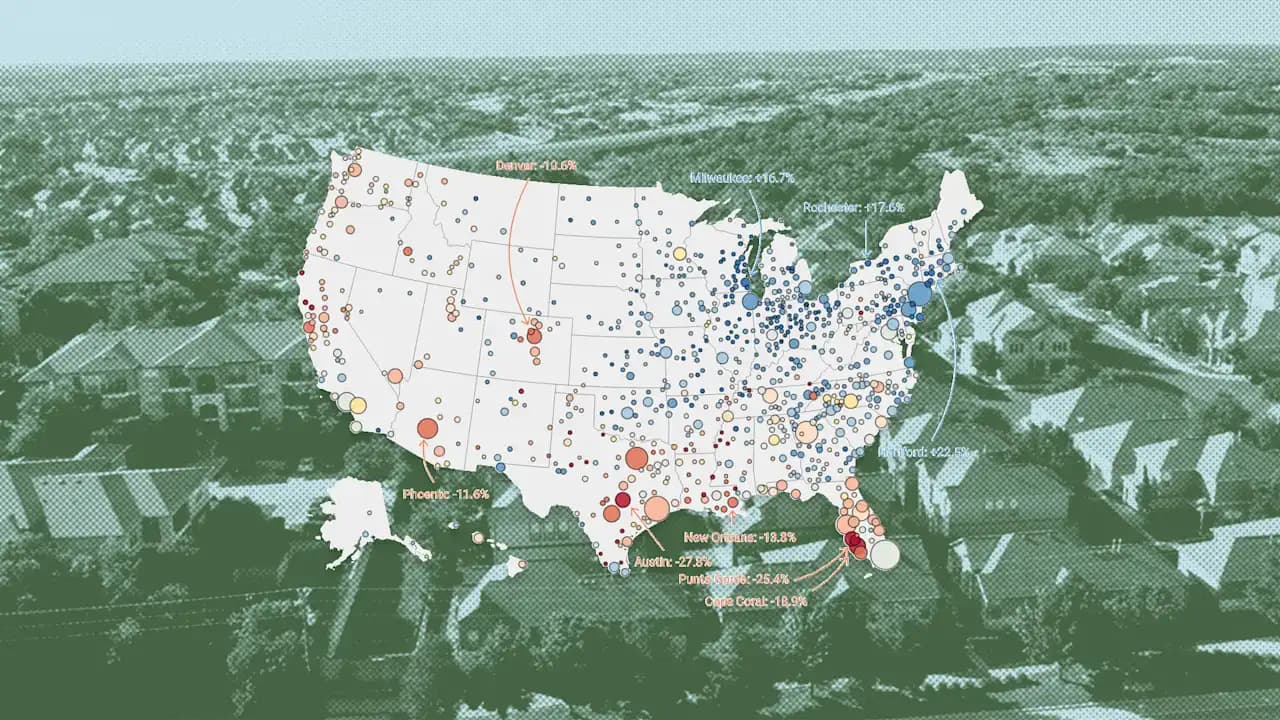
The pandemic housing boom that swept through Sunbelt markets has sharply reversed course. According to analysis by ResiClub, 15 major U.S. metro areas are now experiencing home price declines of at least 10% from their 2022 peaks, with Austin leading the correction at -27.8%. Texas markets particularly hard hit include Dallas-Fort Worth (-10.1%) and San Antonio (-11.2%), while Florida's formerly hot markets like Punta Gorda (-25.4%) and Cape Coral-Fort Myers (-18.9%) are seeing steep pullbacks from pandemic-era highs.
The reversal stems from a fundamental mismatch between pandemic-era demand and local economic fundamentals. During the boom, these Sunbelt destinations saw home prices climb 70% or more—far exceeding wage growth in those regions. When remote work migration slowed and mortgage rates spiked in 2022, these markets proved unsustainable without underlying income growth to support inflated prices. Unlike the national market, which has stabilized, these overheated metros have entered genuine correction territory.
Atlanta-area real estate professionals should note a key difference in their market's resilience. While Atlanta experienced pandemic-era growth, it wasn't among the most extreme outliers like Austin or Punta Gorda, and it benefited from stronger corporate relocation fundamentals tied to major employers. The Sunbelt's current softening—driven by builder incentives and new supply across Florida and Texas—reflects market-specific factors rather than broad regional weakness, though competitive pressures may eventually reach Atlanta's market.
The bright spot in this correction: markets that have shed significant overvaluation may now present reduced downside risk. Punta Gorda, New Orleans, and Austin lead in correcting their valuations, suggesting stabilization may follow once prices align with local earning power. For Atlanta investors and developers, the lesson is clear—sustainable growth requires local economic fundamentals, not just migration trends.