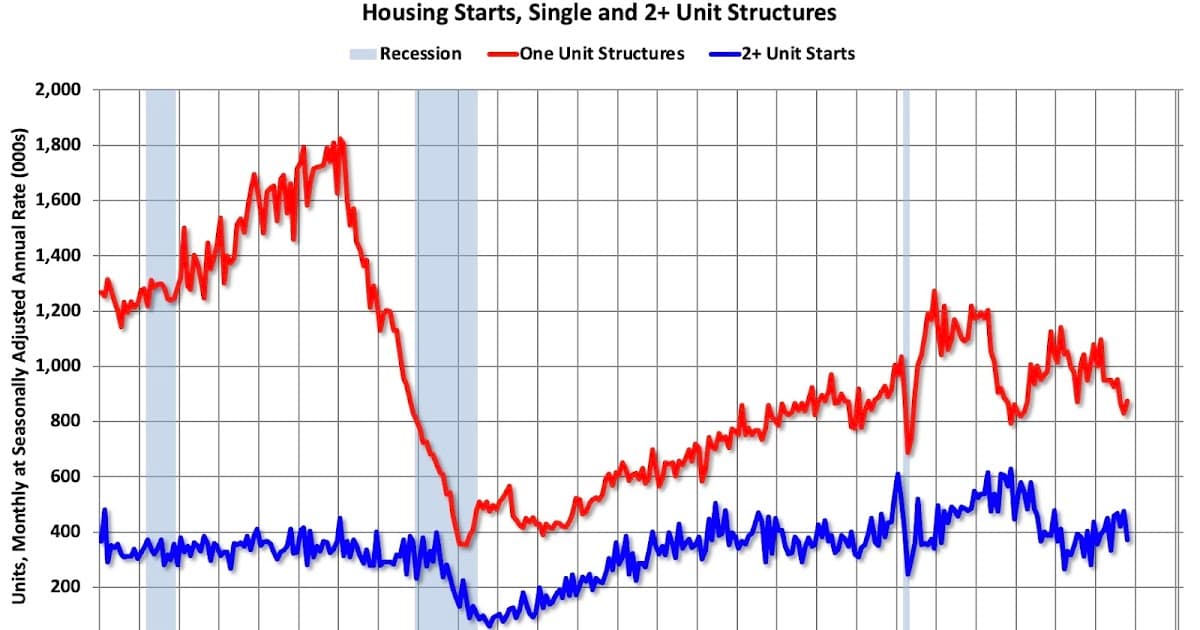
Photo via Calculated Risk
Housing starts contracted to 1.246 million units at an annualized rate during October, according to data highlighted by Calculated Risk. The decline reflects ongoing headwinds facing the residential construction sector amid broader economic uncertainty and elevated mortgage rates that have dampened buyer demand and builder confidence.
The housing market has experienced a marked cooldown in recent months, with several indicators pointing to softening activity. The so-called "home ATM" effect—wherein homeowners tap accumulated equity through refinancing and cash-out withdrawals—largely ceased in the third quarter, reducing a key source of consumer spending stimulus. Meanwhile, asking rents have declined year-over-year in many markets, suggesting a shift in rental supply dynamics as multifamily construction activity normalizes.
Looking ahead, observers are monitoring whether housing market stabilization is underway and what implications elevated mortgage debt levels may have relative to GDP. The current environment underscores the sensitivity of residential construction to interest rate movements and the critical role housing plays in the broader economic picture.