Photo via Calculated Risk
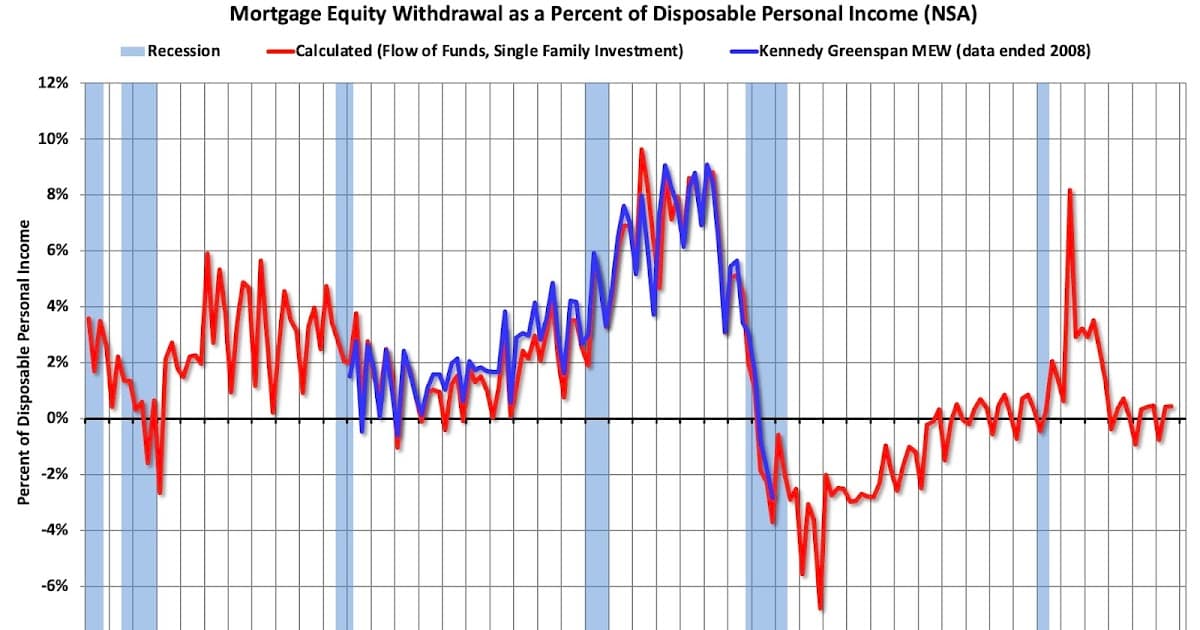
The practice of borrowing against home equity—colloquially termed the "Home ATM" during the housing bubble—has largely ground to a halt in the third quarter, according to recent data from the Federal Reserve's Financial Accounts of the United States. The slowdown marks a significant departure from the robust home equity extraction that characterized the mid-2000s boom, when rising property values incentivized aggressive borrowing against residential assets.
The Federal Reserve's quarterly mortgage debt figures reveal a dramatic deceleration in home equity-backed lending this period. During the housing bubble years, explosive growth in mortgage debt fueled unsustainable consumer spending and left millions of homeowners with negative equity when property values inevitably collapsed, contributing substantially to the subsequent financial crisis and foreclosure wave.
Current market conditions and tighter lending standards have effectively locked most homeowners out of the easy credit tap that characterized the previous decade. Financial experts view the pullback in equity borrowing as a more cautious and sustainable lending environment, though it reflects the lingering caution among both lenders and borrowers following the lessons of the previous downturn.