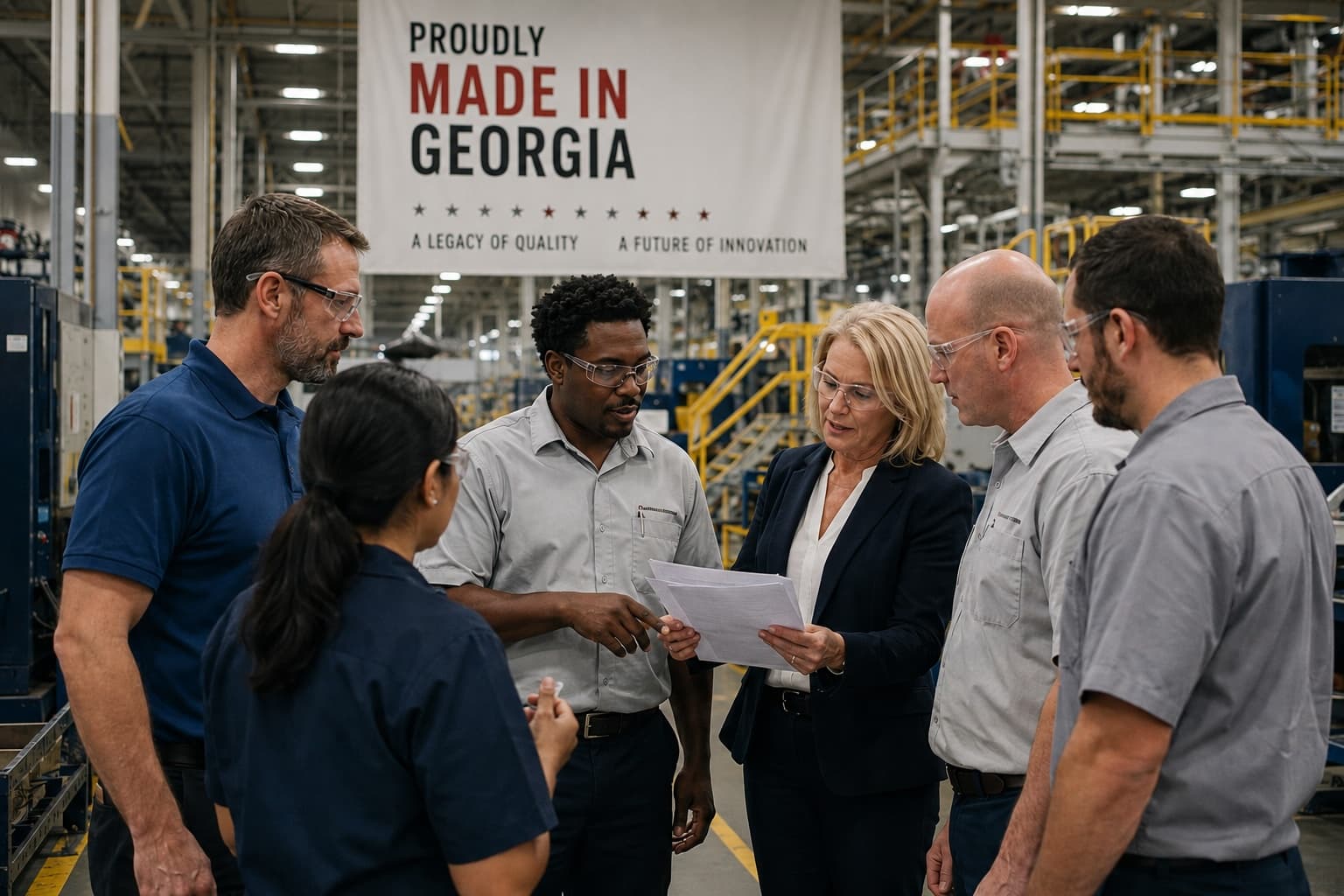
Photo via SaportaReport
Manufacturing remains a vital economic engine for Georgia, with the sector spanning aerospace and automotive production, food processing, logistics, advanced materials, and industrial equipment. These industries collectively support thousands of jobs across the state and reinforce Georgia's reputation as a premier business destination. However, according to SaportaReport, the sector is encountering significant headwinds that threaten to disrupt operations and growth trajectories.
One of the most pressing challenges facing Georgia manufacturers is the persistent shortage of skilled workers. As experienced technicians and engineers retire, companies struggle to recruit and retain talent with the expertise needed for modern production environments. This gap is particularly acute in advanced manufacturing sectors such as aerospace and materials science, where specialized knowledge commands premium compensation and remains in short supply across the Southeast.
Beyond workforce concerns, Georgia manufacturers must contend with rapidly evolving operational and regulatory landscapes. Supply chain disruptions, shifting customer demands, and technological advancement require manufacturers to continuously invest in equipment upgrades and employee training. Companies that fail to adapt risk losing competitive advantage to more agile competitors in other states and regions.
For Atlanta-area manufacturers and stakeholders, the time to address these challenges is now. Business leaders should prioritize workforce development partnerships with technical schools and universities, explore automation investments strategically, and engage with industry associations to share best practices. The state's manufacturing future depends on proactive adaptation to these changing conditions.