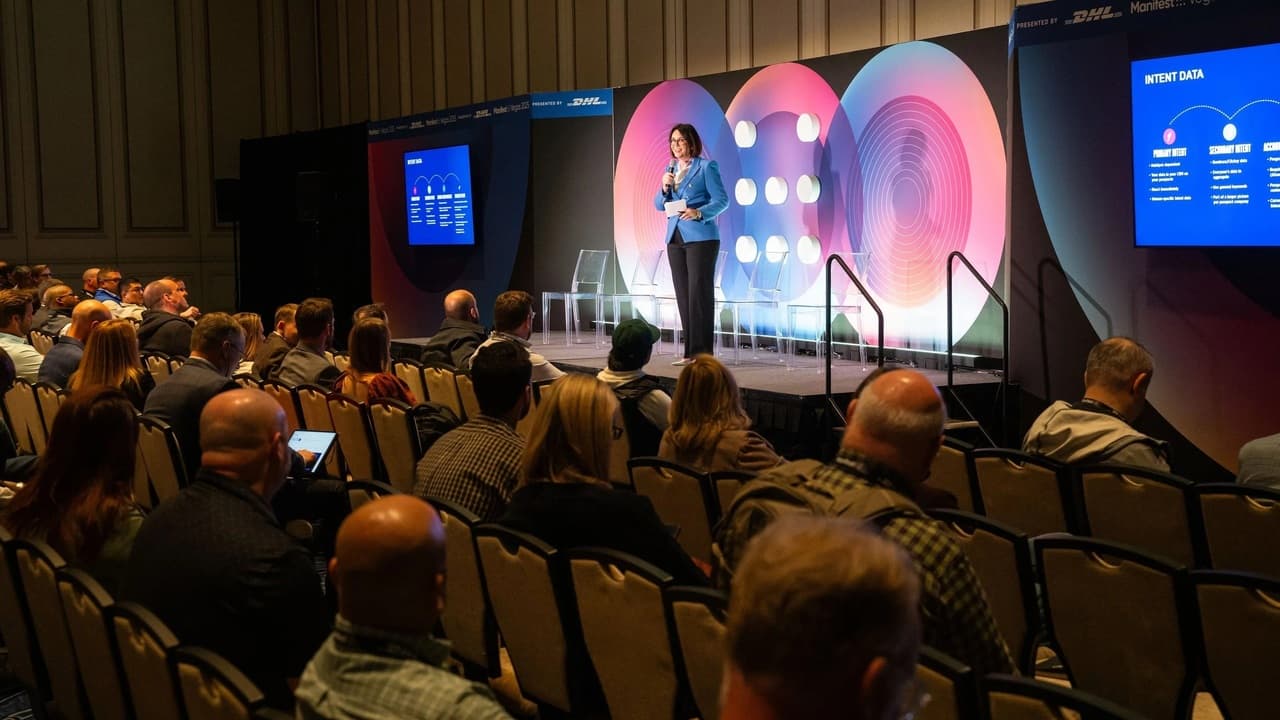
Photo via Fast Company
The enterprise AI revolution isn't happening where most Atlanta business leaders are looking. While companies across the region invest in chatbots and AI assistants, research from McKinsey and consulting firms like Deloitte reveals that nearly 90% of organizations are experimenting with AI, yet fewer than one-third have actually scaled meaningful programs. The problem isn't the technology itself—it's where it's being deployed. According to recent analysis, organizations gaining real competitive advantage are those redesigning their entire workflows and business processes around AI, not simply layering the technology onto existing operations.
The shift from visible AI tools to embedded systems represents a fundamental architectural change that Atlanta's business community needs to understand. Rather than starting with prompts or user interfaces, successful implementations begin with what researchers call "context engineering"—establishing persistent, structured information environments that AI systems operate within from the start. This approach, championed by Anthropic and IBM, treats AI as organizational infrastructure that remembers company context, constraints, and feedback loops rather than as a session-based assistant that resets with each interaction. For Atlanta companies in finance, logistics, and professional services, this distinction could determine whether AI investments deliver measurable ROI or remain expensive experiments.
The real competitive divide emerging isn't between companies "using AI" and those that aren't—that distinction is already obsolete. Instead, the gap is widening between organizations treating AI as a tool layer and those embedding it into their operating core. According to Microsoft's 2025 Work Trend Index, frontier firms are moving away from rigid hierarchies toward dynamic, outcome-focused structures where humans and agents collaborate around business goals. Accenture's research echoes this finding, noting that AI is beginning to flatten organizational structures and create self-organizing workflows. Atlanta firms that continue bolting AI onto legacy systems will find themselves at a disadvantage against competitors that have fundamentally reimagined how work gets done.
When enterprise AI finally delivers transformative results, it won't look like a technology implementation—it will look like the company itself becoming more intelligent. MIT Sloan and Deloitte warn that many AI projects are stalling because enterprises are trying to automate processes designed for humans rather than reimagining the work itself. For Atlanta's business leaders, the message is clear: the next phase of competitive advantage belongs to companies that treat AI transformation as an organizational redesign challenge, not an IT procurement decision. The winners won't be those with the flashiest demos, but those whose internal systems quietly become more adaptive, context-aware, and operationally coherent.