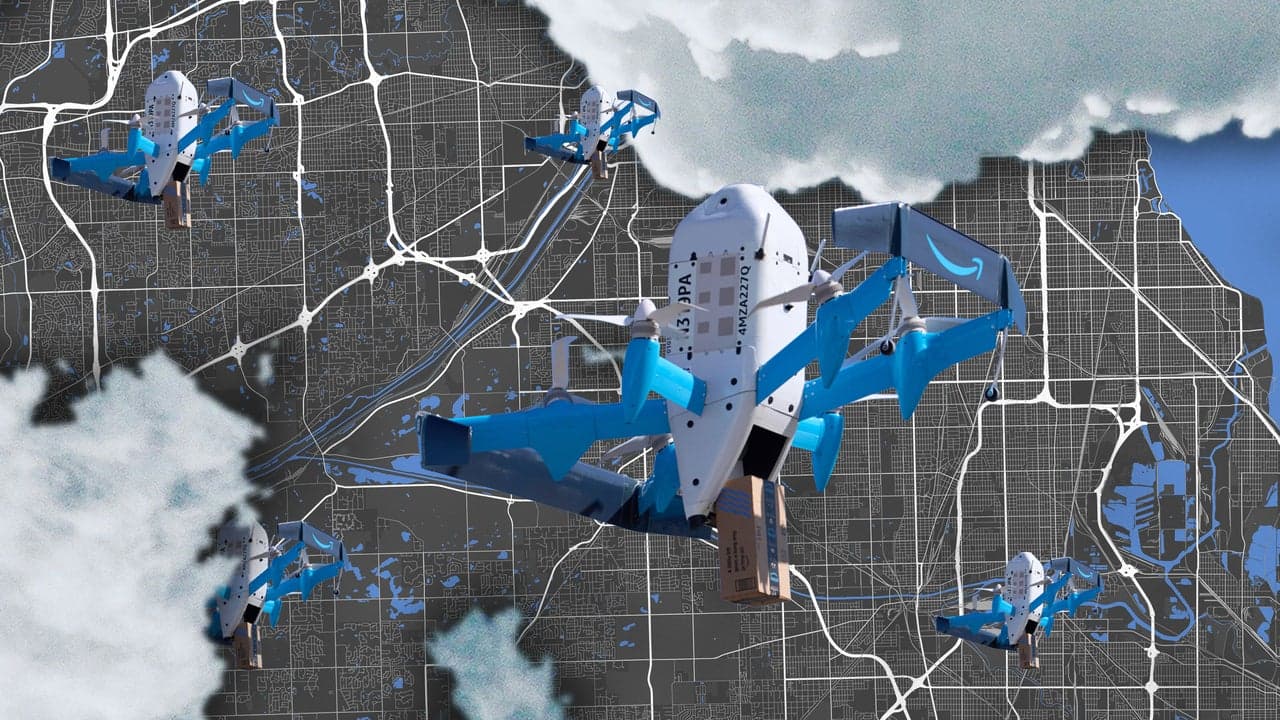
Photo via Fast Company
Amazon's ambitious drone delivery program is entering a critical expansion phase. According to Fast Company, CEO Andy Jassy aims to deploy drones for 500 million packages annually within a decade, with pilot programs already active in eight U.S. cities and four more planned. While Chicago's south suburbs are next in line for trials this spring, the broader implications for metropolitan areas like Atlanta—with significant warehouse and logistics infrastructure—deserve close attention from business leaders and policymakers preparing for this inevitable shift in last-mile delivery.
Safety concerns loom large as delivery drones proliferate. Amazon's FAA-approved MK30 drones weigh up to 85 pounds, cruise at 73 mph at altitudes up to 400 feet, and operate with autonomous AI systems. Recent incidents demonstrate real risks: a Texas drone crashed into an apartment building, and another collided with a construction crane. For densely populated areas, the compounding effect of multiple vendors operating drones simultaneously raises questions about collision prevention, power outages, and emergency response protocols that current regulatory frameworks have yet to adequately address.
The regulatory and infrastructure gap is concerning. The FAA's Advanced Aviation Technologies office lacks transparency about specific trial details, contradicting its own 2023 "Innovate 2028" mandate requiring public understanding of drone operations. Amazon provides minimal specifics about community safety protocols, incident reporting mechanisms, or how package security will translate to autonomous delivery. Atlanta's business community should demand clearer guidelines before drone operations begin in the region, particularly regarding liability, insurance, and public notification standards.
For Atlanta logistics and real estate professionals, drone delivery represents both opportunity and complexity. The technology could optimize supply chains and reduce delivery times, but success depends on developing interoperable air traffic management systems, establishing communication standards between vendors, and building genuine community trust. Business leaders should engage proactively with regulators and Amazon to shape policies that protect public safety while enabling innovation—ensuring Atlanta doesn't become a testing ground without adequate safeguards.