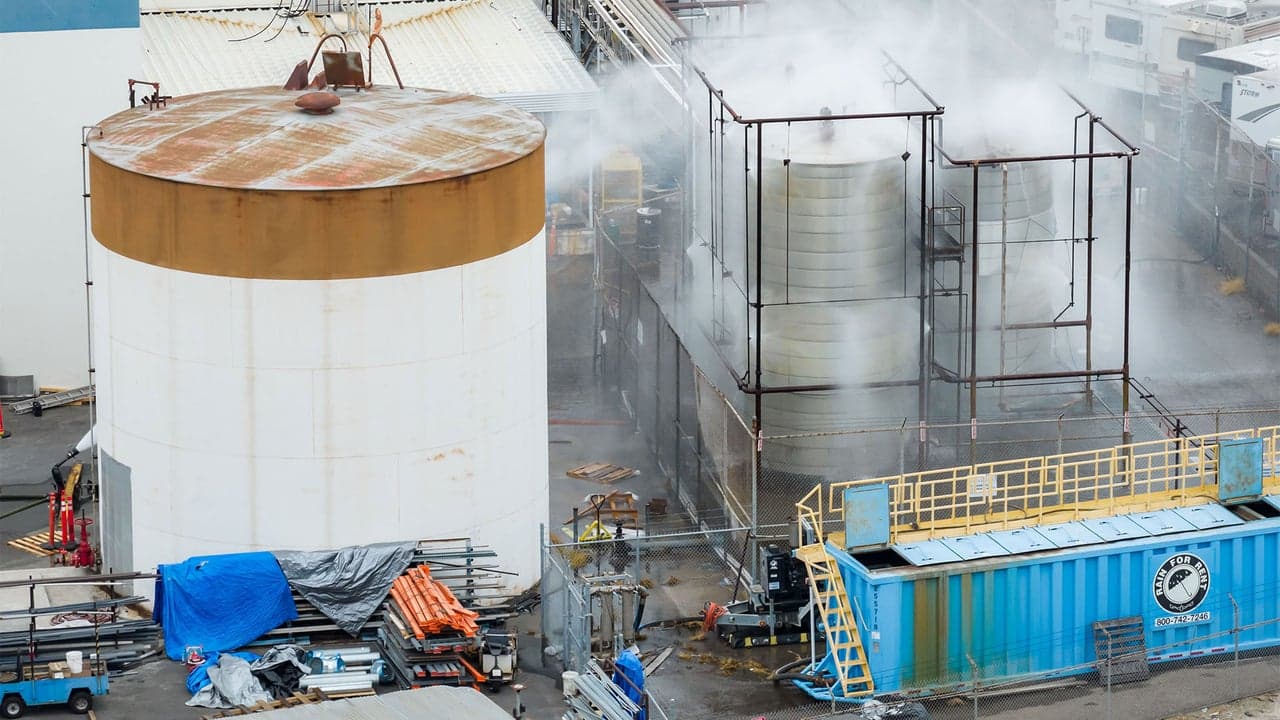
Photo via Fast Company
A critical incident at GKN Aerospace Transparency Systems in Southern California has put industrial safety back in the spotlight. The company's tank containing methyl methacrylate—a chemical used in aerospace plastic components—overheated and began releasing vapors, forcing authorities to evacuate 50,000 residents from Garden Grove. While a crack in the tank may have relieved dangerous pressure and reduced explosion risk, the incident underscores vulnerabilities in how industrial facilities manage hazardous materials, particularly in densely populated areas.
The response by California officials involved drone monitoring, water-cooling operations, and containment barriers to prevent environmental contamination. However, the incident exposed a troubling pattern: GKN Aerospace had previously settled with state regulators in 2025 for over $900,000 due to recordkeeping violations, permitting issues, and emissions violations. For Atlanta-area manufacturers in aerospace, chemicals, and related sectors, the case illustrates the importance of rigorous compliance protocols and proactive hazard management to avoid costly penalties and operational disruptions.
Legal consequences are already mounting for the company. Residents have filed a class-action lawsuit citing property value impacts regardless of the incident's outcome. This precedent carries weight for Georgia-based industrial operators, particularly those in the metro Atlanta region where manufacturing facilities operate near residential and commercial zones. Property damage claims and litigation costs can exceed direct remediation expenses, making preventive investment in safety infrastructure economically prudent.
Experts emphasize that detailed, chemical-specific air monitoring—not just generic pollution testing—is essential following hazardous incidents. This lesson from the California crisis applies broadly to supply chain and manufacturing partners across the Southeast. Atlanta business leaders managing industrial operations should review their emergency response protocols, regulatory compliance records, and community communication strategies to ensure preparedness for potential crises and to protect both employee safety and corporate reputation.