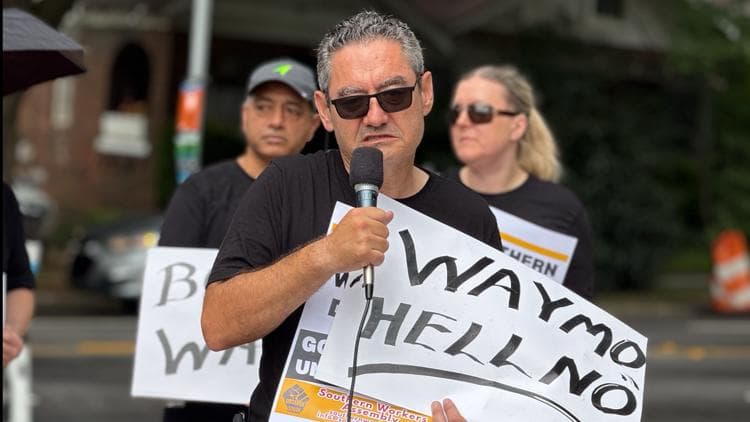
Photo via 11Alive Atlanta
According to 11Alive Atlanta, a coalition of rideshare drivers has escalated concerns about Waymo's growing presence in the city, organizing rallies and appealing directly to municipal leaders. The drivers argue that the proliferation of driverless vehicles is materially impacting their income streams at a time when many rely on gig economy work as a primary income source. This grassroots push represents a critical moment for Atlanta's transportation ecosystem as autonomous technology deployment accelerates.
The dispute underscores a broader tension in Atlanta's tech landscape: the city's appeal as a test market for innovation versus the economic security of its existing workforce. Waymo's expansion into Atlanta reflects the region's growing reputation as a hub for autonomous vehicle development, but the controversy reveals the human cost of rapid technological adoption. City leaders now face pressure to balance entrepreneurial opportunity with worker protections.
This labor-versus-innovation dynamic extends beyond rideshare to Atlanta's broader transportation and logistics sectors, which employ thousands of drivers. How municipal officials respond to these concerns could set a precedent for future autonomous technology rollouts and influence whether Atlanta remains an attractive market for companies seeking to pilot emerging technologies. The coming weeks will test whether the city can craft policies that accommodate innovation without displacing its current workforce.