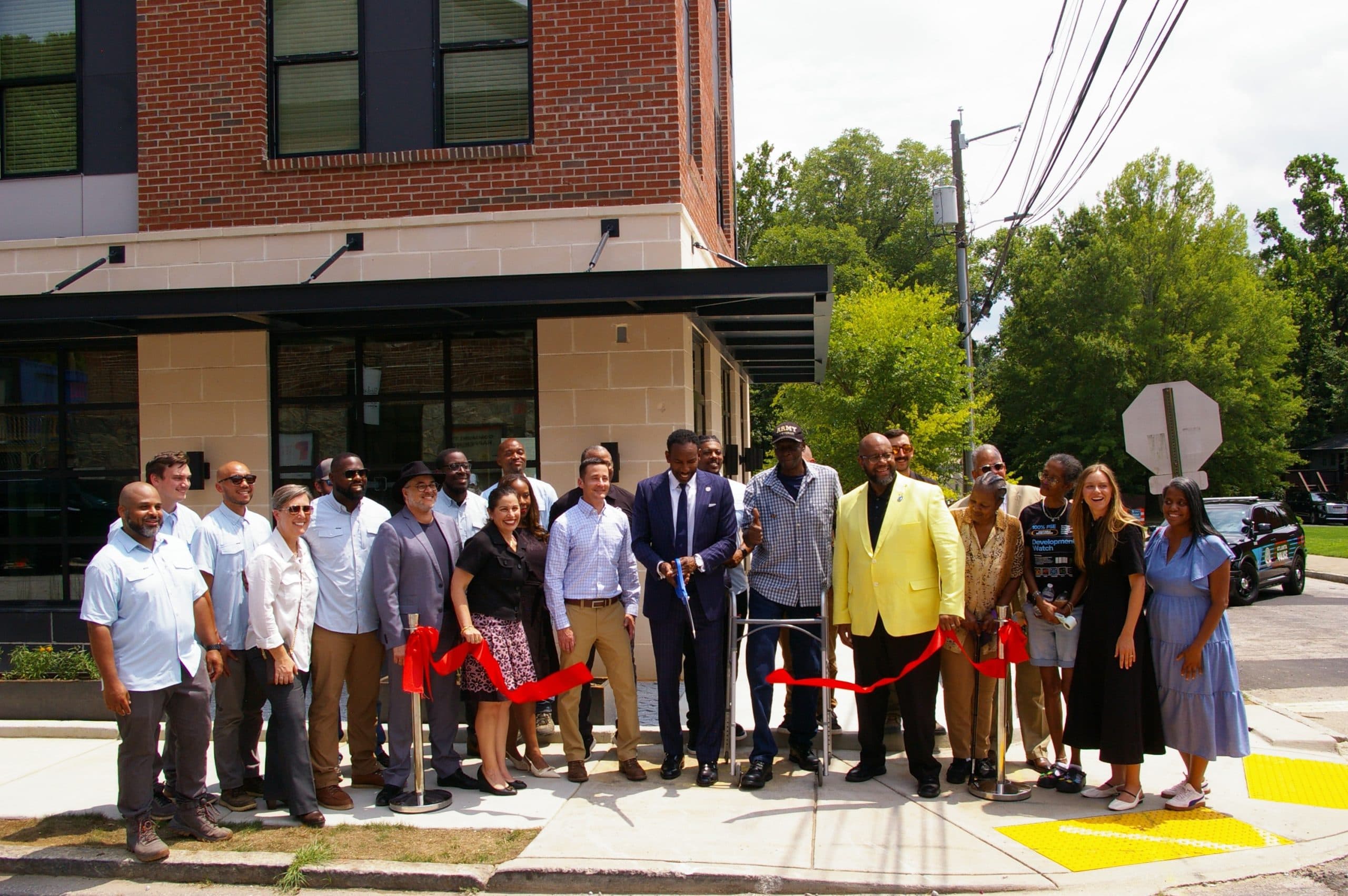
Photo via SaportaReport
A mixed-use affordable housing development at 880 North Avenue in English Avenue faced significant regulatory hurdles that threatened to derail the project entirely. According to SaportaReport, the development aimed to replace deteriorating residential structures with modern, mixed-use construction. Environmental regulations around stream buffers—required setbacks from waterways—created complications that nearly stalled the initiative before a city council member introduced legislative solutions to streamline the approval process.
The streamlined buffer legislation represents a broader effort by Atlanta city leadership to balance environmental protection with urban development goals. Rather than abandoning environmental safeguards, the new approach modernizes how stream buffer requirements are applied to infill projects in established neighborhoods. This adjustment recognizes that strict setback regulations, while well-intentioned, can inadvertently prevent redevelopment of blighted properties and the creation of needed housing stock in areas like English Avenue.
The project's revival signals a potential model for other stalled Atlanta developments facing similar regulatory obstacles. As the city continues to grapple with affordable housing shortages and neighborhood revitalization, finding workable solutions to code requirements becomes increasingly important for developers and city planners. The English Avenue case demonstrates how targeted policy adjustments can unlock housing projects without compromising environmental or community standards.