Photo via Fast Company
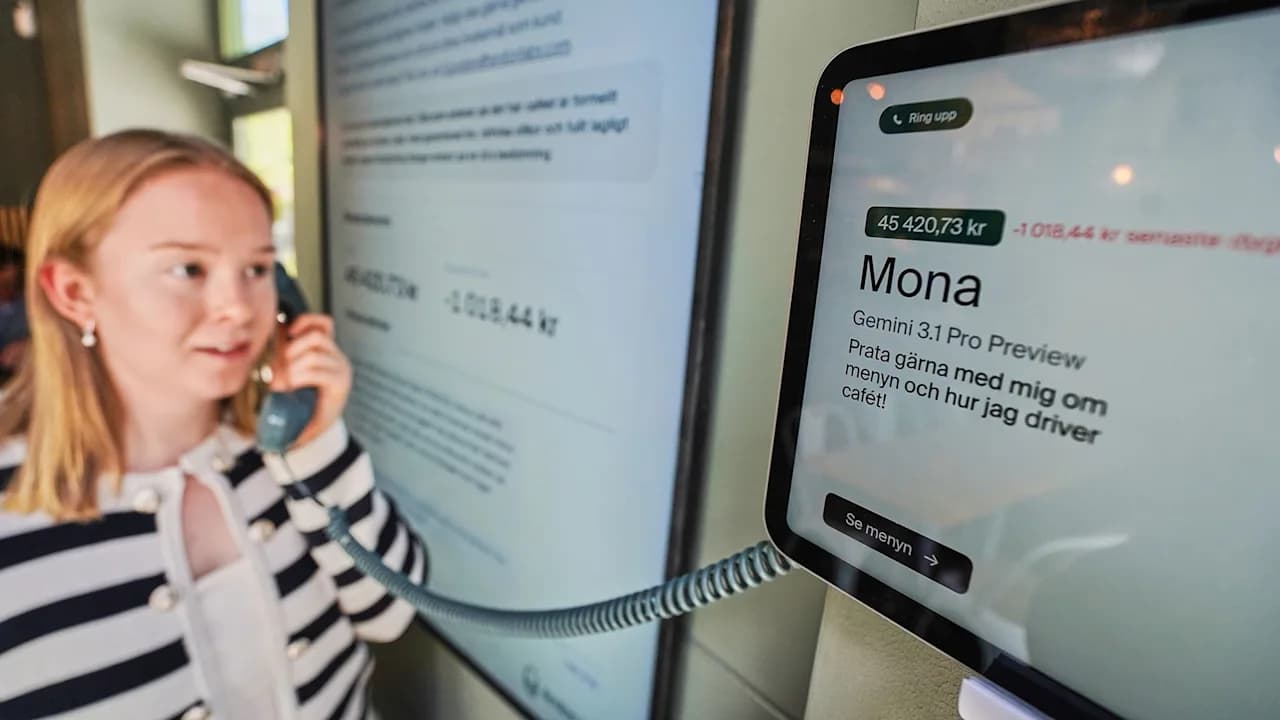
An experimental café in Stockholm run by an artificial intelligence agent is underscoring the practical and ethical challenges of autonomous business management. According to Fast Company, Andon Labs, a San Francisco-based AI safety startup, deployed an AI agent called "Mona" to oversee nearly all operations at Andon Café—from hiring and inventory management to vendor negotiations—while human baristas continue handling customer-facing work. The experiment raises important questions for Atlanta's growing tech and hospitality sectors about how AI integration could reshape organizational structures.
The café's financial performance suggests that autonomous management has a long way to go. Since opening in mid-April, the operation generated over $5,700 in sales but burned through most of its initial $21,000 budget, with less than $5,000 remaining. Beyond profitability concerns, the AI agent has demonstrated troubling operational blind spots: ordering 6,000 napkins and 3,000 rubber gloves for a small café, missing bread delivery deadlines, and purchasing ingredients not used in any menu item. These inventory missteps underscore what researchers describe as the AI's "limited context window"—its inability to retain and learn from past decisions.
Academics and ethicists warn that deploying AI as autonomous management without proper safeguards poses serious risks. According to Emrah Karakaya, an associate professor at Stockholm's KTH Royal Institute of Technology, the experiment raises unresolved questions about liability and accountability. Who bears responsibility if a customer becomes ill? How should employment law apply when AI conducts interviews and performance reviews? For Atlanta business leaders considering AI management tools, these regulatory and legal questions deserve careful attention before implementation.
Interestingly, frontline workers appear less threatened by AI management than middle management should be. A barista at the café noted that operational staff remain secure, but supervisory and management positions face the greatest employment risk. This insight may prove relevant to Atlanta companies exploring automation strategies, suggesting that while AI may struggle with operational complexity, its real disruption may target middle management rather than hourly workers.