Photo via Fast Company
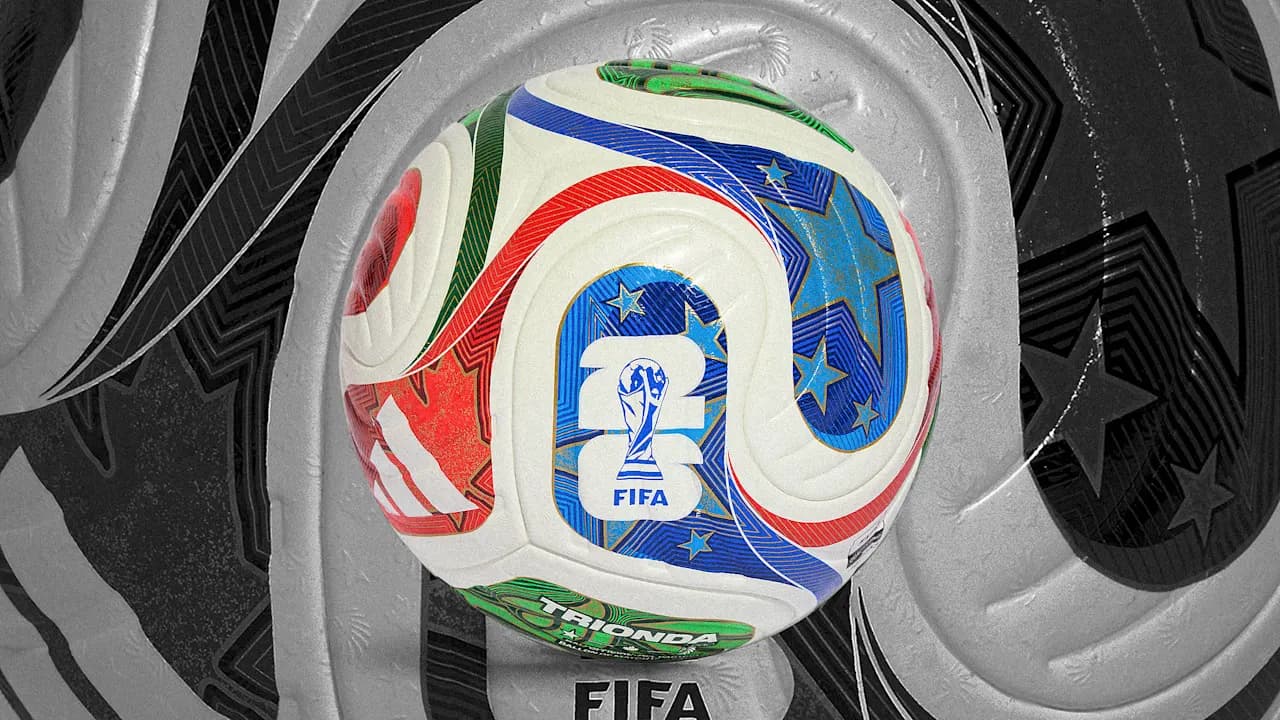
Adidas has engineered a significant evolution in World Cup equipment with the introduction of the Trionda ball for the 2026 tournament hosted across North America. For the first time in men's World Cup history, matches will be played with a four-panel design—the fewest panels ever used—highlighting how material science and aerodynamic precision continue to shape professional sports. The ball's distinctive red, blue, and green panels represent the three host nations: Canada, the United States, and Mexico, marking a departure from traditional multi-panel soccer ball construction that dominated the sport for decades.
The engineering behind the Trionda addresses a critical challenge that plagued previous iterations, particularly the infamous 2010 Jabulani ball that became notorious for unpredictable flight patterns. According to wind tunnel testing conducted by physics researchers, the Trionda reaches its drag crisis at approximately 27 mph, a speed range that occurs during typical corner kicks and free kicks. This represents a significant improvement over the Jabulani's 49-60 mph drag crisis, which caused erratic behavior during game-critical moments. The new ball's intentionally deep seams and pronounced grooves help maintain consistent aerodynamic performance across relevant playing speeds.
Beyond flight characteristics, the Trionda incorporates embedded chip technology positioned within one panel to assist officials with semi-automated offside decisions and VAR systems. This shift from centrally suspended measurement units in previous balls demonstrates how sports equipment manufacturers integrate multiple technologies into single products—a trend relevant to Georgia's growing sports technology sector and companies developing performance-tracking solutions. The architecture adjustment allows the ball to maintain balanced weight distribution while incorporating advanced officiating capabilities.
Researchers acknowledge that while laboratory tests suggest the Trionda will perform more predictably than predecessors, real-world variables including spin, altitude, humidity, and atmospheric pressure will ultimately determine match outcomes. Players may notice that hard-hit long balls lose a few meters of range compared to previous designs, though testing shows this difference remains within acceptable parameters. As sports equipment continues evolving through precision engineering and materials science, companies like Adidas demonstrate how innovation in athletic performance equipment requires rigorous scientific validation alongside practical field testing.