Photo via Fast Company
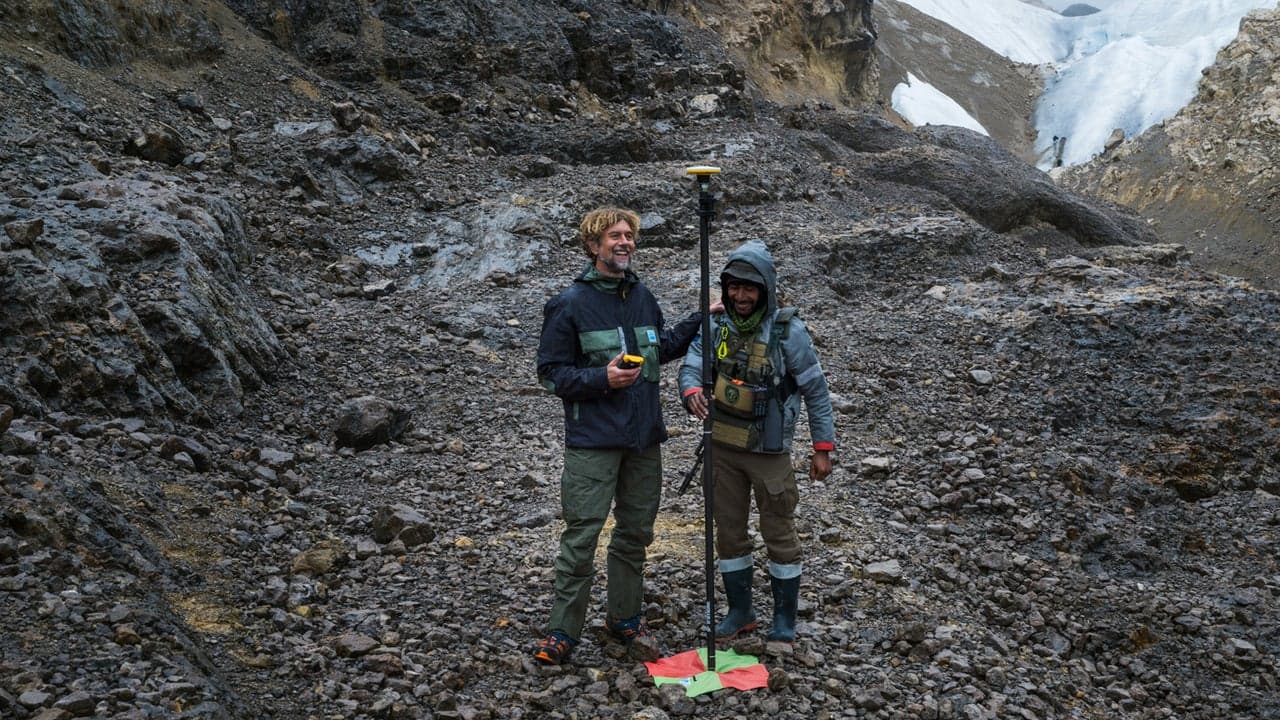
Explorer and scientist Klaus Thymann recently deployed cutting-edge 3D modeling technology to document some of Earth's rarest tropical glaciers in Indonesia's remote highlands before they disappear entirely. According to Fast Company, the glaciers near Puncak Jaya—Indonesia's highest mountain—have lost 97% of their ice cover since 1980 and are expected to vanish within the decade. The ambitious documentation effort required helicopter access to dangerous, rebel-held terrain in Central Papua Province, where the remaining ice sits adjacent to tropical rainforests in a region marked by intense precipitation and geopolitical instability.
Thymann's approach combined drone photography with sophisticated geolocation software from Trimble, a technology company known for precision mapping solutions, to create centimeter-level detail models of the glaciers and surrounding terrain. The method proved essential because traditional satellite imaging struggles with the area's persistent cloud cover—the region experiences rainfall roughly 300 days annually. By capturing overlapping aerial images from multiple angles, the team stitched together comprehensive 3D representations that satellite imagery alone could not provide, creating a permanent digital record of a rapidly changing ecosystem.
The technology and methodology reflect growing applications of advanced mapping tools in environmental monitoring and climate documentation. Thymann's nonprofit organization, Project Pressure, specializes in using art, science, and activism to track environmental change globally. The open-source glacier data he collected can be accessed by scientists studying ecosystem transformation and climate impacts on previously stable ice formations. For Atlanta-area technology firms and environmental consulting companies, the project demonstrates emerging commercial applications for precision geolocation and drone mapping in climate resilience work.
Beyond its scientific value, the documentation effort preserves a cultural record of what local communities call the "eternity" glaciers—a landmark disappearing due to global warming. The visual reference created by Thymann's 3D models offers future generations documentation of landscapes that will soon cease to exist. As climate change continues accelerating environmental transformations worldwide, similar preservation technologies may become critical tools for monitoring and understanding ecosystem shifts in vulnerable regions.